Why Community Is the Missing Piece in Mental Health
Individual therapy is valuable — but it's not the whole picture. Here's why community connection is one of the most powerful and underutilized tools in emotional wellness.

We live in an era of unprecedented access to mental health information. Therapy apps, self-help books, wellness podcasts, online courses — the resources are everywhere. And yet, rates of loneliness, anxiety, and depression continue to climb.
Something is missing. And increasingly, researchers, clinicians, and community organizers are pointing to the same answer: each other.
The Loneliness Epidemic
In 2023, the U.S. Surgeon General issued an advisory declaring loneliness a public health crisis. The data is striking: nearly half of American adults report measurable levels of loneliness, and the health consequences are serious — comparable, some studies suggest, to smoking 15 cigarettes a day.
Loneliness isn't just an emotional experience. It activates the body's stress response, disrupts sleep, weakens immune function, and increases the risk of depression, anxiety, and cognitive decline. We are, at a biological level, wired for connection. When that connection is absent, we suffer.
And yet, the dominant model of mental health care is still largely individual. One person, one therapist, one hour a week. That model has real value — but it can't address the community-level disconnection that underlies so much of what people are struggling with.
What Community Actually Does for Mental Health
When we talk about community as a mental health resource, we're not talking about surface-level socializing. We're talking about something deeper: the experience of being known, accepted, and supported by people who share your values or your circumstances.
Research on social connection and mental health consistently shows that:
Belonging reduces stress. When people feel genuinely connected to a community, their baseline stress levels decrease. The nervous system registers safety in numbers — literally. Being part of a group that has your back activates the same neurological pathways as physical safety.
Shared experience reduces shame. One of the most isolating aspects of mental health struggles is the belief that you're uniquely broken — that no one else feels the way you do. Community shatters that illusion. When you hear someone else articulate an experience you thought was yours alone, something releases. You're not broken. You're human.
Accountability accelerates growth. Individual insight is valuable, but it's often in relationship with others that we actually change. When we're witnessed in our struggles and our growth, when we make commitments to people we care about, when we see others doing the hard work of healing — we're more likely to do it ourselves.
Connection is protective. Studies on resilience consistently find that social support is one of the strongest predictors of how well people weather adversity. It's not the absence of hard things that makes people resilient — it's the presence of people who show up when hard things happen.
Why We Built Community Into Our Model
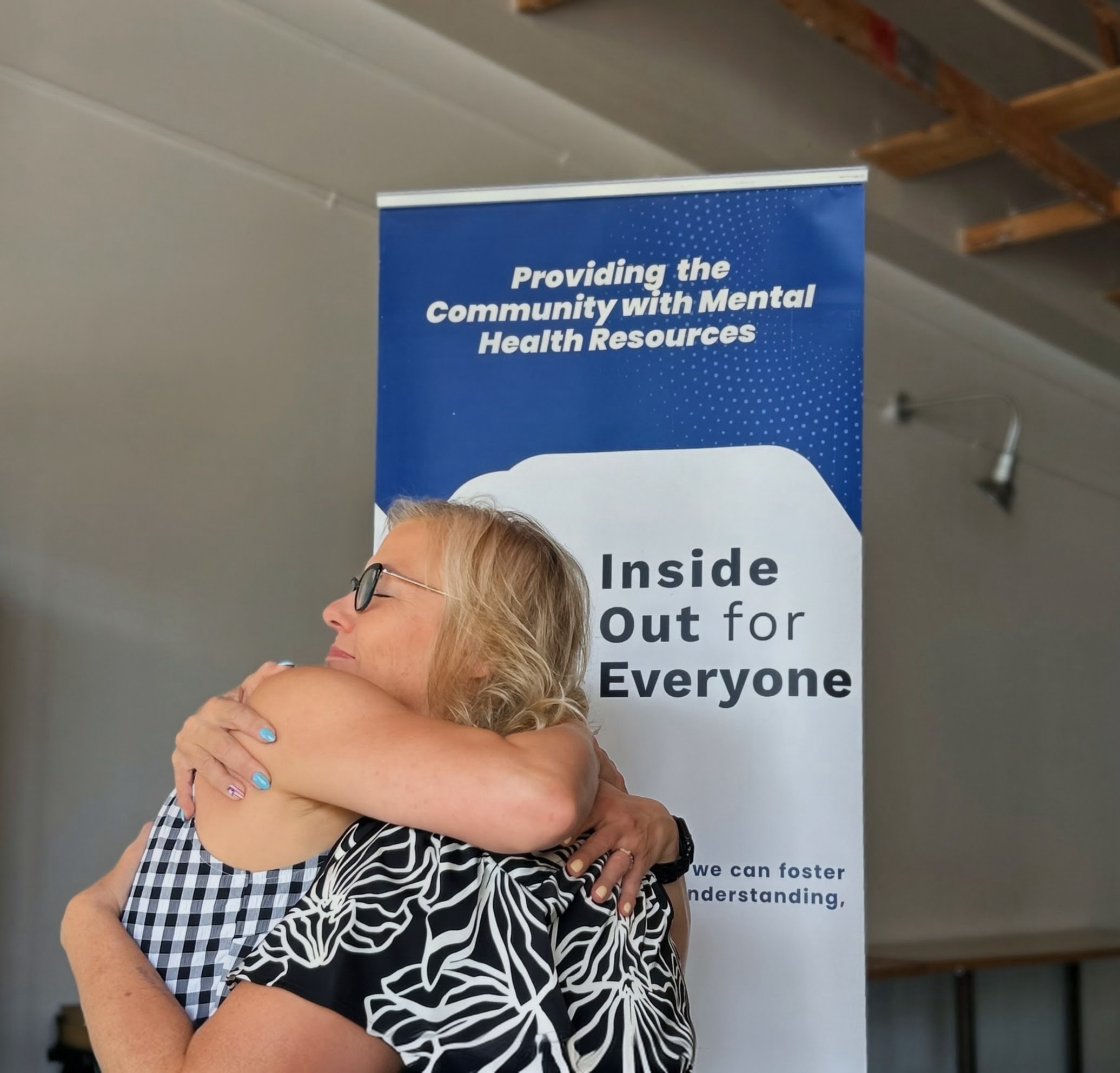
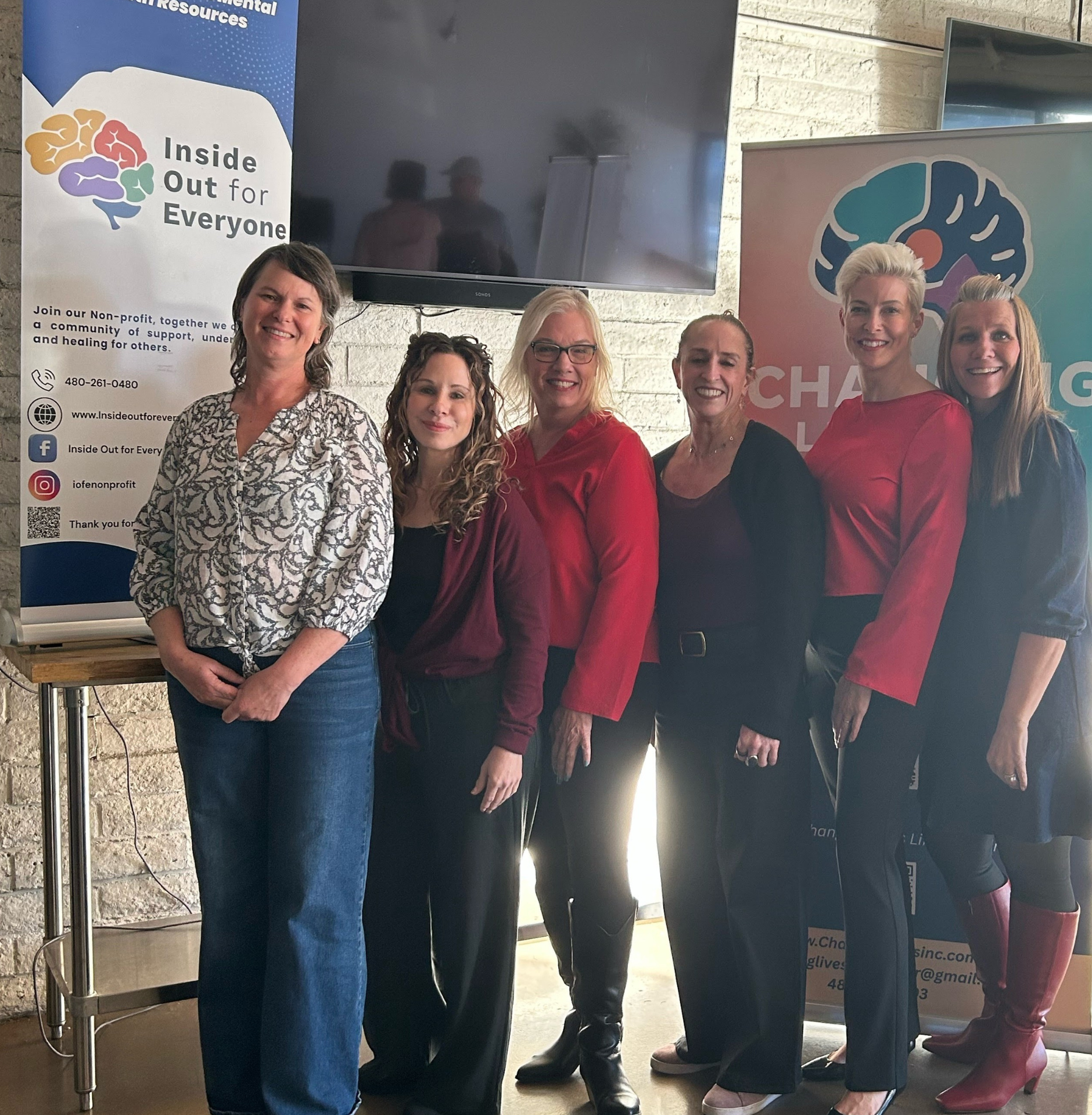
At Inside Out for Everyone, community isn't an add-on to our work. It's the foundation of it.
Our Live Podcast Experience at Hundred Mile Brewing Co isn't just a content delivery mechanism. It's a gathering. It's a room full of people who've chosen to show up and be part of a conversation about emotional wellness — together, in public, without shame. Every first Sunday, something happens in that room that can't happen on a podcast you listen to alone in your car.
Our community workshops bring people together around shared learning. Our partnerships with organizations like Wandermama create spaces where people can step out of their daily routines and reconnect — with themselves and with others. Our sponsored access program isn't just about funding therapy; it's about making sure that financial barriers don't prevent people from accessing the support networks they need.
We believe that healing happens in community. Not instead of individual work — alongside it.
Building Your Own Community of Wellness
You don't have to wait for a formal program to start building community around emotional wellness. Here are some ways to begin:
Be the one who goes first. Community forms around vulnerability. When you're willing to be honest about your own struggles — in appropriate contexts, with people you trust — you give others permission to do the same. Someone has to go first. It might as well be you.
Show up consistently. Community is built through repeated contact over time. The people who show up to the same event month after month, who check in on each other between gatherings, who remember what someone shared last time — those are the people who build real connection.
Create low-stakes entry points. Not everyone is ready to walk into a therapy group or a mental health workshop. But most people are willing to grab coffee with a friend, attend a community event, or listen to a podcast. Meet people where they are.
Normalize the conversation. The more we talk openly about emotional wellness in our everyday lives — at work, at family gatherings, with neighbors — the more we shift the culture around it. Every honest conversation is a small act of community building.
The Bigger Picture
We're working toward a future where every community has the emotional wellness infrastructure it needs to thrive. That means accessible professional support, yes — but it also means communities where people know each other, look out for each other, and feel safe enough to be honest about what they're going through.
That future is built from the ground up. It's built in living rooms and breweries and retreat centers and community centers. It's built one conversation, one gathering, one act of genuine connection at a time.
You are part of that work. Every time you show up, reach out, or simply make space for someone else's experience, you're contributing to a more emotionally healthy community.
And that matters more than you might think.
Explore Topics
Written by
Inside Out for Everyone
Content creator and writer sharing insights and stories.