Talking About Mental Health Without Shame
Stigma is one of the biggest barriers to getting help. Here are practical ways to start honest conversations about mental health — with yourself and the people you love.
There's a moment many of us know well. Someone asks how you're doing, and you say "fine" — even when you're not. Even when you're exhausted, overwhelmed, or quietly falling apart.
We've been taught, in a thousand subtle ways, that emotional struggle is something to manage privately. To push through. To not burden others with. And that silence — that reflexive "I'm fine" — is one of the most costly things we do to ourselves and each other.
Stigma around mental health doesn't just live in dramatic moments. It lives in the small, everyday choices to stay quiet.
Where Stigma Comes From
Mental health stigma is layered and complex. Some of it is cultural — certain communities have strong traditions of self-reliance that can make asking for help feel like weakness. Some of it is generational — many of us grew up in households where emotions weren't discussed, let alone processed. Some of it is systemic — mental health has historically been treated as separate from "real" health, reinforcing the idea that it's less legitimate.
And some of it is simply fear. Fear of being judged. Fear of being seen as unstable or unreliable. Fear that if people really knew what was going on inside, they'd pull away.
Understanding where stigma comes from doesn't make it disappear. But it does help us recognize it for what it is: a learned response, not a truth.
Starting With Yourself
The most important conversation about mental health is the one you have with yourself.
This sounds simple, but it's genuinely hard. Many of us have spent years developing the habit of pushing difficult feelings aside — staying busy, staying productive, staying "fine." Slowing down enough to actually check in with yourself takes practice.
A few places to start:
Name what you're feeling. Not just "stressed" or "tired," but more specifically. Are you anxious? Grieving? Lonely? Resentful? The more precisely you can name an emotion, the more power you have over it. Research in neuroscience calls this "affect labeling" — and it actually reduces the intensity of difficult emotions.
Drop the judgment. Feelings aren't good or bad. They're information. Feeling angry doesn't make you a bad person. Feeling sad doesn't mean something is wrong with you. Feelings are signals worth listening to, not evidence of weakness.
Give yourself permission to not be okay. This one is harder than it sounds. Many of us have internalized the idea that we should be able to handle everything. But you are a human being, not a machine. Hard things are hard. You're allowed to feel that.
Having the Conversation With Someone Else
Once you've started being more honest with yourself, the next step is letting someone else in. This doesn't have to mean a full emotional disclosure to a near-stranger. It can be as simple as being a little more truthful with someone you trust.
Choose your moment and your person. Not every conversation needs to happen with everyone. Think about who in your life is genuinely safe — someone who listens without immediately trying to fix things, who won't minimize what you're sharing, who can hold space for complexity.
Start small. You don't have to share everything at once. "I've been having a hard time lately" is a complete sentence. It opens a door without requiring you to walk all the way through it immediately.
Use "I" language. "I've been feeling really overwhelmed" lands differently than "everything is a mess." It keeps the focus on your experience rather than inviting defensiveness or problem-solving.
Let it be imperfect. The conversation might feel awkward. The other person might not respond exactly the way you hoped. That's okay. The act of speaking honestly — even imperfectly — matters.
When Someone Comes to You
Knowing how to receive a mental health conversation is just as important as knowing how to start one.
When someone shares something vulnerable with you, the most powerful thing you can often do is simply listen. Not fix. Not advise. Not immediately share your own similar experience. Just be present with what they're telling you.
A few things that help:
- Reflect back what you hear. "It sounds like you've been carrying a lot" communicates that you're paying attention.
- Ask before advising. "Do you want to talk through it, or are you looking for suggestions?" gives the person agency.
- Normalize without minimizing. "A lot of people feel that way" can be comforting — but make sure it doesn't come across as dismissing their specific experience.
- Follow up. A text a few days later that says "I've been thinking about what you shared — how are you doing?" means more than people realize.
The Community Piece
Individual conversations matter enormously. But stigma is also a community-level problem, and it requires community-level solutions.
When we talk openly about mental health in our families, our workplaces, our neighborhoods — when we normalize the idea that everyone has an inner life that deserves attention — we change the environment for everyone. We make it a little safer for the person who's been suffering in silence to finally reach out.
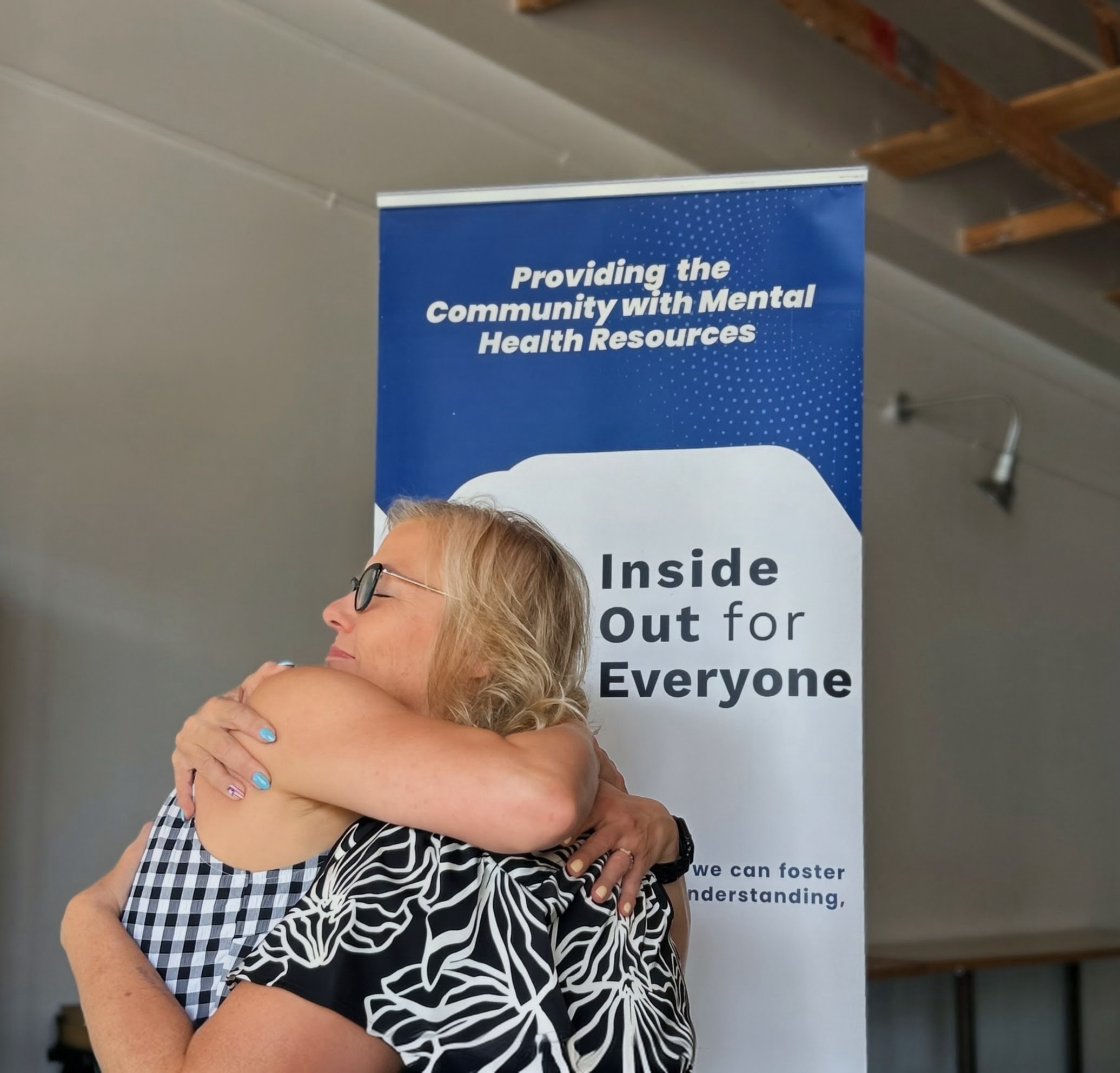
This is part of why IOFE does what it does. Our Live Podcast Experience isn't just entertainment — it's a public demonstration that these conversations can happen in ordinary spaces, with ordinary people, without shame. Every workshop we host, every story we share, every person we sponsor into care is a small act of stigma reduction.
You Don't Have to Have It All Figured Out
You don't need to be in crisis to start taking your emotional wellness seriously. You don't need a diagnosis to benefit from support. And you don't need to have the perfect words to start a meaningful conversation.
You just need to be willing to be a little more honest — with yourself, and with the people around you.
That's where it starts. And it turns out, that's often enough.
Explore Topics
Written by
Inside Out for Everyone
Content creator and writer sharing insights and stories.